
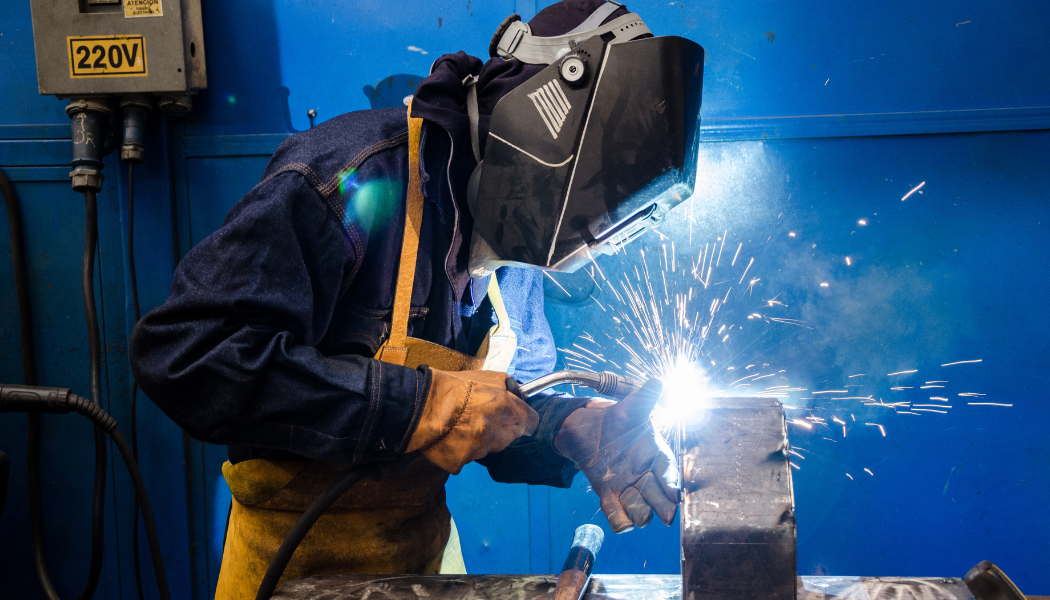
Technical Risks, Process Flow, Calculations, and Quality Implications in Structural Fabrication
Abstract
Welding contract review and technical review are among the most critical phases in welded structural fabrication. Failures at this stage frequently lead to:
- project delays,
- nonconformities,
- structural defects,
- increased rework costs,
- contractual disputes,
- safety incidents,
- and certification failure.
Under ISO 14731 and EN 1090, organizations are required to establish effective welding coordination, technical review procedures, and production controls before fabrication activities begin.
This paper examines the major technical and operational challenges associated with welding contract review and technical review, including:
- specification interpretation,
- execution class determination,
- welding procedure qualification,
- material traceability,
- inspection planning,
- risk assessment,
- and production feasibility evaluation.
The paper also includes process flow analysis, technical calculations, and industry data relating to welding quality risks and structural fabrication performance.
1. Introduction
Welding is classified as a “special process” because weld quality cannot always be fully verified through final inspection alone. Consequently, welding quality must be built into the process from the earliest stages of project planning and technical review.
In structural fabrication projects governed by EN 1090, contract and technical review activities are essential to ensure:
- compliance with design requirements,
- execution class conformity,
- resource capability,
- qualified personnel availability,
- and technical feasibility.
According to industry studies, welding-related rework costs can range between:
- 5% to 30% of total fabrication cost,
depending on project complexity and process maturity. (researchgate.net)
Poor contract review is one of the leading contributors to:
- incorrect welding specifications,
- unqualified procedures,
- incompatible materials,
- delayed fabrication,
- and certification audit failures.
2. Relationship Between ISO 14731 and EN 1090
ISO 14731
ISO 14731 defines:
- welding coordination responsibilities,
- technical oversight requirements,
- competence expectations,
- review responsibilities,
- and welding quality management duties.
The standard requires competent welding coordination personnel to supervise:
- technical review,
- procedure qualification,
- production control,
- inspection coordination,
- and corrective action management.
EN 1090
EN 1090 specifies:
- technical execution requirements,
- CE marking obligations,
- Factory Production Control (FPC),
- execution class requirements,
- welding quality requirements.
EN 1090 also requires:
- implementation of ISO 3834 welding quality requirements,
- qualified welding procedures,
- and competent welding coordination personnel. (boconline.co.uk)
3. Welding Contract and Technical Review Process Flow
Typical Technical Review Workflow

Each stage contains significant technical risks.
4. Major Challenges in Welding Contract and Technical Review
4.1 Incorrect Interpretation of Technical Specifications
One of the most common failures is misinterpretation of:
- welding symbols,
- acceptance criteria,
- material grades,
- fatigue requirements,
- corrosion allowances,
- or design loads.
Example
A drawing may specify:
- EN 1090 EXC3 requirements,
but fabrication planning mistakenly assumes EXC2 controls.
Consequences
This may result in:
- inadequate inspection,
- insufficient welder qualifications,
- lower quality acceptance criteria,
- certification nonconformities.
4.2 Execution Class Determination Errors
EN 1090 defines four execution classes:
- EXC1,
- EXC2,
- EXC3,
- EXC4.
Higher execution classes require:
- stricter controls,
- more extensive NDT,
- increased documentation,
- higher welding competence.
Risk Example
Using EXC2 inspection levels for an EXC3 bridge structure may create:
- structural reliability risks,
- fatigue cracking exposure,
- regulatory noncompliance.
4.3 Welding Procedure Qualification Challenges
Critical welding processes require qualified:
- WPS (Welding Procedure Specification),
- WPQR/PQR (Procedure Qualification Record).
Common Challenges
- missing procedure qualifications,
- invalid qualification ranges,
- improper heat input,
- incorrect consumables,
- unsuitable joint design.
Example Heat Input Calculation
Heat input directly affects:
- weld penetration,
- toughness,
- residual stress,
- and metallurgical structure.
Formula
Q=V×I×601000×S
Q=1000×SV×I×60
Where:
- QQQ = Heat input (kJ/mm)
- VVV = Voltage (V)
- III = Current (A)
- SSS = Travel speed (mm/min)
Example Calculation
Given:
- Voltage = 28V
- Current = 220A
- Travel Speed = 300 mm/min
Calculation:
Q=28×220×601000×300=1.23 kJ/mm
If heat input exceeds qualified limits:
- weld toughness may reduce,
- HAZ cracking risk increases,
- procedure becomes noncompliant.
4.4 Material Compatibility Challenges
Material review failures may involve:
- incompatible filler metals,
- incorrect parent material groups,
- missing material certificates,
- traceability failures.
Common Industry Issue
Substituting steel grades without engineering review can affect:
- weldability,
- strength,
- toughness,
- fatigue performance.
4.5 Welder Qualification Gaps
Under EN 1090:
- welders must be qualified according to ISO 9606.
Challenges include:
- expired qualifications,
- qualification range limitations,
- incorrect welding positions,
- lack of process-specific approval.
Example Qualification Risk
A welder qualified for:
- PA position (flat welding)
may incorrectly perform: - PF vertical-up welding.
This increases:
- lack of fusion risk,
- slag inclusions,
- repair rates.
4.6 Inspection and NDT Planning Challenges
Technical review must define:
- inspection points,
- hold points,
- NDT scope,
- acceptance standards,
- inspection methods.
EN 1090 Inspection Requirements
Higher execution classes require increased NDT coverage.
Example:
- EXC2 fillet weld UT = limited,
- EXC3/EXC4 may require significantly higher percentages.
4.7 Production Feasibility Problems
Contract review sometimes fails to assess:
- workshop capability,
- equipment availability,
- welding position access,
- distortion control,
- manpower competence,
- production sequencing.
This can result in:
- fabrication bottlenecks,
- poor weld quality,
- missed delivery dates.
5. Welding Risk Assessment
Typical Welding Risks
| Risk | Consequence |
| Incorrect WPS | Structural failure |
| Inadequate NDT | Undetected defects |
| Poor traceability | Certification failure |
| Unqualified welders | Increased defects |
| Excessive heat input | Reduced toughness |
| Material mismatch | Cracking |
6. Financial Impact of Poor Technical Review
Research shows welding defects can significantly increase project costs.
Example Cost Analysis
Assume:
- Initial fabrication cost = £2,000,000
- Rework rate due to welding defects = 8%
Rework Cost
Rework Cost=2,000,000×0.08=160,000
Potential additional losses:
- project delays,
- liquidated damages,
- inspection repetition,
- customer dissatisfaction,
- certification suspension.
7. Role of Welding Coordination Personnel
According to ISO 14731, welding coordinators must oversee:
- technical review,
- welding quality planning,
- personnel qualification,
- production supervision,
- inspection coordination,
- corrective actions.
Competent welding coordinators reduce:
- technical ambiguity,
- production risk,
- and nonconformity exposure.
8. Digitalization and Traceability
Modern fabrication increasingly uses:
- digital WPS systems,
- RFID traceability,
- automated welding records,
- cloud-based documentation,
- welding parameter monitoring.
Benefits include:
- improved traceability,
- reduced human error,
- real-time quality monitoring,
- stronger auditability.
9. Best Practices for Effective Technical Review
Organizations should:
- implement formal review procedures,
- involve competent welding coordinators,
- verify all WPS/WPQR requirements,
- assess execution class requirements early,
- validate welder qualifications,
- establish inspection plans,
- conduct risk assessments,
- maintain full material traceability.
10. Conclusion
Contract and technical review activities represent one of the most critical phases in welding quality management under ISO 14731 and EN 1090.
Failures during review stages can create:
- structural integrity risks,
- safety failures,
- nonconformities,
- financial losses,
- and regulatory violations.
Effective welding coordination, risk-based planning, qualified procedures, competent personnel, and controlled technical review processes are essential for:
- achieving structural reliability,
- maintaining EN 1090 compliance,
- reducing defects,
- and improving fabrication performance.
As fabrication complexity increases globally, organizations must strengthen welding technical review systems to ensure safe, compliant, and high-quality welded structures. Learn More